
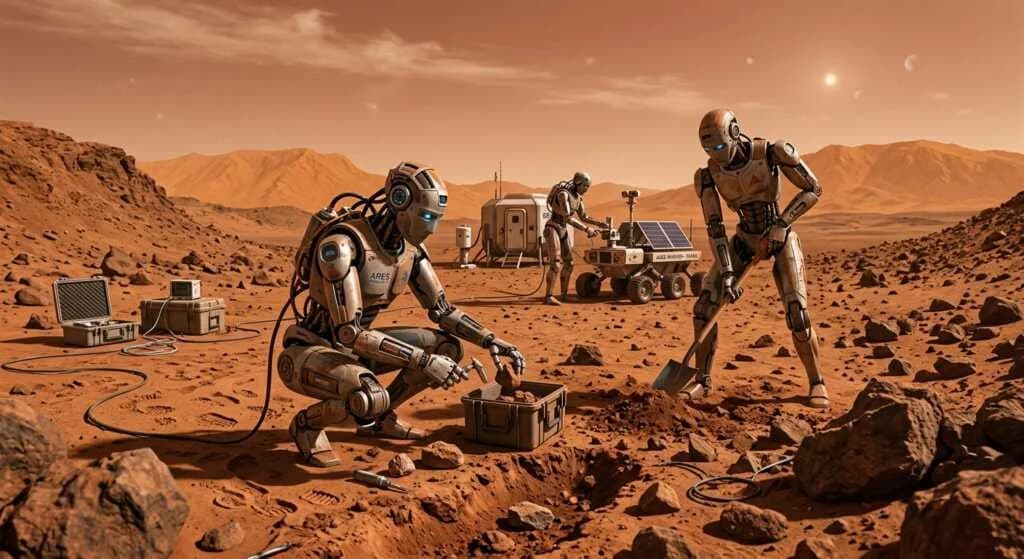
NASA is creating advanced robots that can work alongside astronauts on lunar and Mars exploration missions to handle hazardous, repetitive, and complex tasks safely. The Dexterous Robotics team, led by 16 members from Johnson Space Center in Houston, aims to develop robotic hardware and software with human-like manipulation capabilities. The primary goal is not to replace astronauts, but to make space exploration missions safer and reduce human sacrifice during space missions.
One of NASA's main humanoid robots is Valkyrie (also known as R5), which stands 6 feet 2 inches tall and weighs 300 pounds. It features 44 degrees of freedom across its body and can operate for nearly an hour on a 1.8 kWh battery. Valkyrie is designed for challenging and hazardous environments and serves as a platform to test technologies useful in space, including walking, sensing, and object manipulation. The development also builds on experience from Robonaut 2 (R2), which first reached space in 2011.
Currently, NASA is testing robots at the iMETRO facility to perform maintenance, cargo transfer, and equipment handling tasks. In one test, the robot arm successfully identified a spacecraft door, turned the handle to open it, moved cargo bags, and inspected the refrigeration system. NASA's short-term objective is to systematically develop robot technologies to support long-term human habitation on the Moon, with future expansion to Mars missions.
Ref: Technology Innovation


