
news
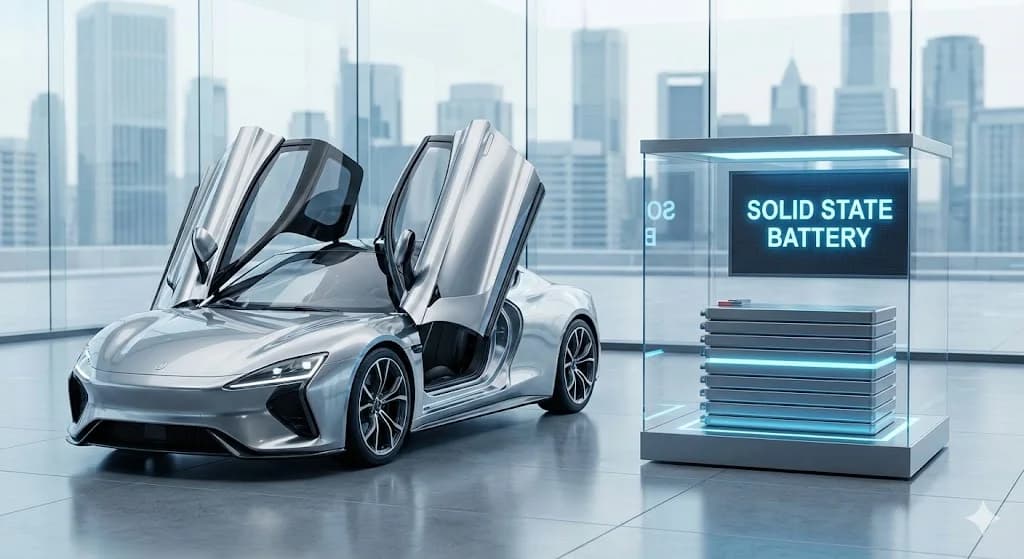
Solid-State Battery Technology That Could Transform the EV World
While electric vehicles (EVs) are gaining popularity worldwide, most users still have concerns: range anxiety, long charging times, and fire safety. The technology set to solve all of these is the solid-state battery.
While electric vehicles (EVs) are gaining popularity worldwide, most users still have concerns: range anxiety, long charging times, and fire safety. The technology set to solve all of these is the solid-state battery.
What Is a Solid-State Battery?
The lithium-ion batteries currently used in our phones and cars rely on a liquid electrolyte to conduct electricity. Solid-state batteries replace that liquid with a solid electrolyte. This small change has the potential to transform the entire technology world.
What Gets Better?
1. No More Fire Risk
Current batteries can catch fire when overheated or damaged. Since solid-state batteries don't contain flammable liquids, the risk of combustion or explosion drops dramatically.
2. Greater Range
Solid-state batteries have a much higher energy density. For the same size, they can store roughly twice the energy of current batteries — meaning a single charge could take you over 1,000 km (600+ miles).
3. Faster Charging
Today's EVs take a long time to fully charge, but solid-state technology could fully charge in just 10–15 minutes — roughly as fast as filling up a gas tank.
When Will They Arrive?
Toyota, Nissan, Samsung SDI, and major Chinese companies are all racing to develop this technology. Solid-state battery-powered cars could begin appearing in the market around 2026–2027.
In conclusion, the solid-state battery is the "Holy Grail" of electric vehicles. If it can be produced affordably and at scale, the era of gasoline cars will be much closer to its end.
Ref: Google Gemini


