
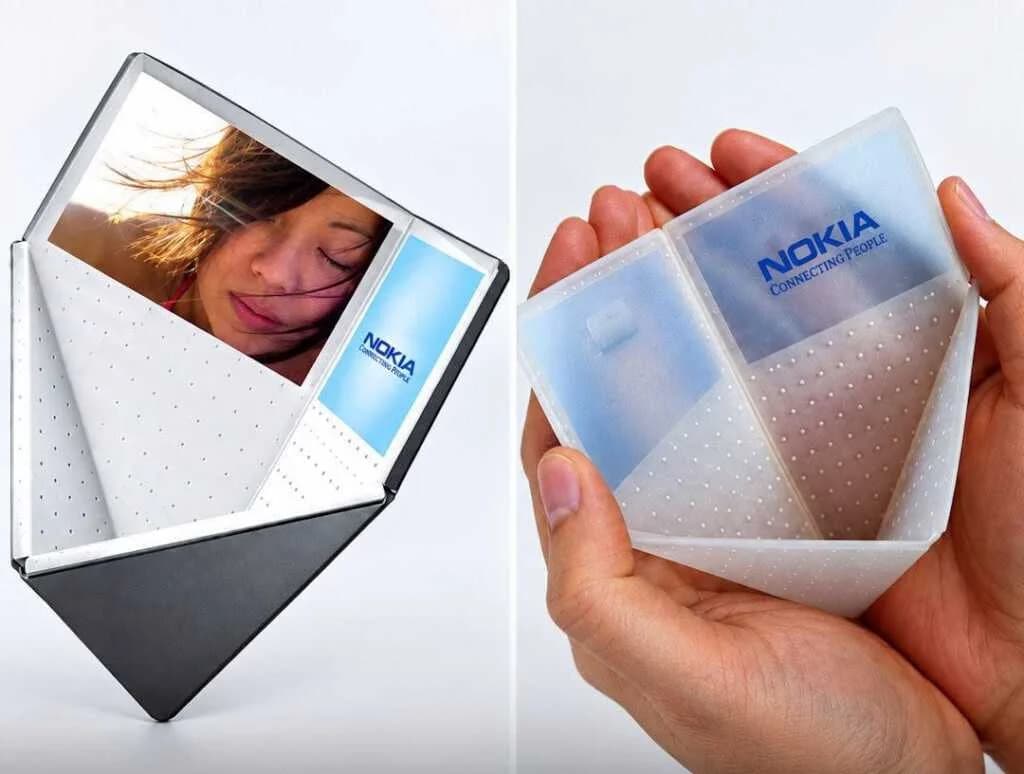
Nokia company explored the unique and innovative technology concept of "transmitting ambient scents during phone calls"—a feature that current smartphones still cannot perform—back in 2006.
The Nokia Scentsory phone design, created in collaboration with researcher Kimberly Hu from Central Saint Martins school in London, aimed to integrate four senses: sight, hearing, touch, and smell.
The phone would detect the scent from the surroundings of the person making the call and then transmit that scent back to the other person through devices equipped with scent-releasing mechanisms.
The phone would feature two LCD screens, a keypad, scent detection and scent-release devices, and was tested to transmit environmental data such as color and temperature.
Up to three modes, including a special Scentsory Mode for scent-related functions, were considered, and a prototype model of the phone was first unveiled at a future mobile design exhibition held in London in June 2006.
However, the Scentsory phone remained a conceptual prototype design and never reached the stage of actual commercial production and sales.
This project, which anticipated mobile technology possibilities that could emerge after 2015, stands as a remarkable example of how designers have envisioned the future of smartphones with broad vision for nearly 20 years.
Ref: Technology Innovation


