
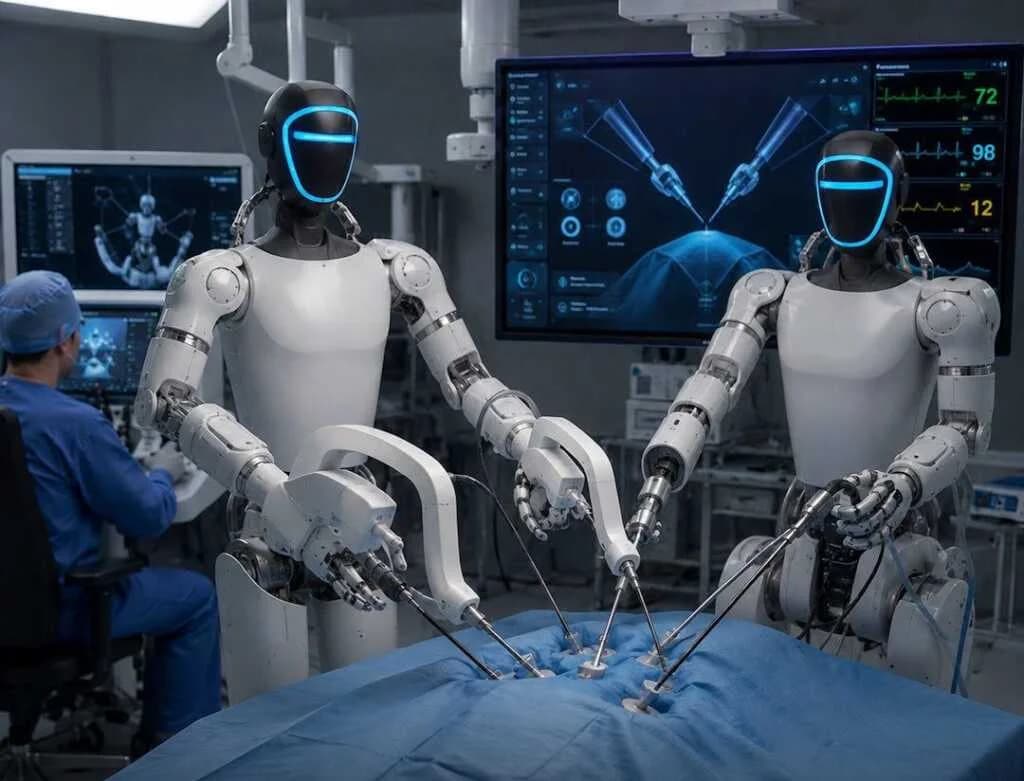
Researchers from UC San Diego have successfully performed the world's first two surgeries on living animals using remote-controlled humanoid robots.
During this experiment, the first surgery was performed through collaboration between a human surgeon and one humanoid robot, while the second surgery was conducted using two humanoid robots working together. These surgeries were conducted as tests on living mammals, not on patients.
Unlike the specialized surgical robots currently in use, these humanoid robots can operate with standard surgical instruments and can work directly in surgical rooms designed for humans.
Throughout the entire surgery, physicians controlled the robots remotely, and the robots did not perform autonomously.
Although further testing is needed before these robots can be used on humans, this success represents an important step toward the future of robotic healthcare.
In the future, researchers hope these robots will be able to assist in providing surgical treatment in space missions, conflict zones, areas affected by natural disasters, and remote rural hospitals. This research was published in the July 8 issue of the journal Nature.
Ref: Technology Innovation


