
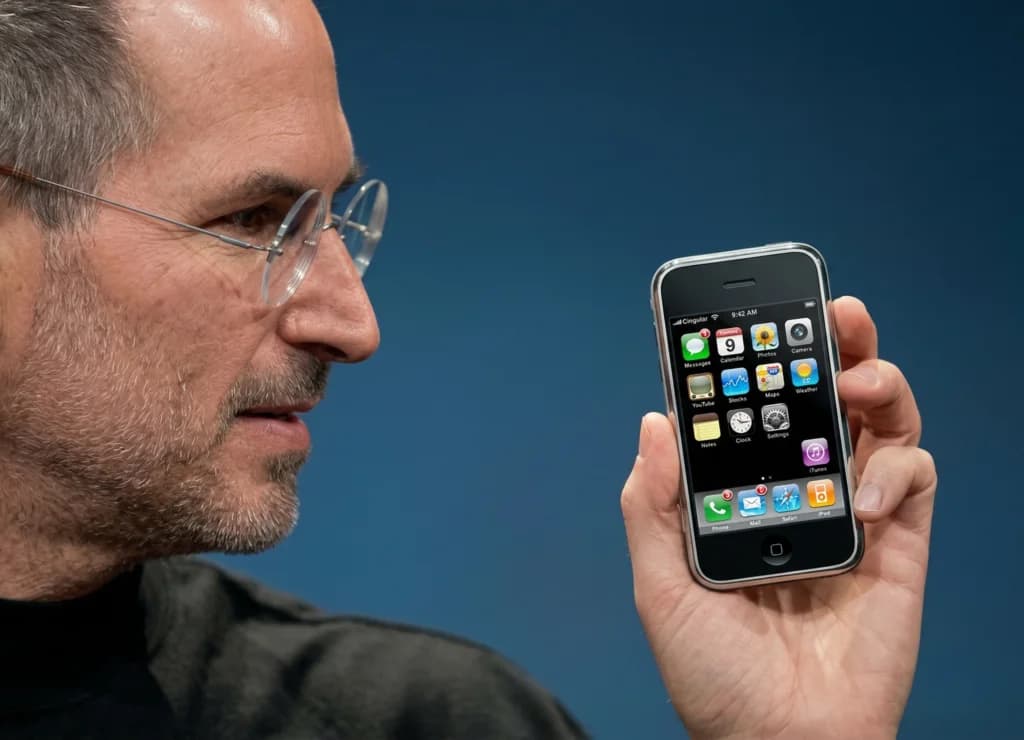
Apple celebrated its 50th anniversary on April 1, 2026. Over five decades, no decision proved bolder — or more consequential — than choosing to kill the successful iPod in order to build the iPhone.
In the early 2000s, the iPod was Apple's best-selling product, outselling Mac computers by more than 900% by 2004. But as phone makers began adding music playback to handsets, former Apple executive Tony Fadell and his team decided they needed something better. Early experiments with a click-wheel phone proved unworkable for typing, so hundreds of engineers worked around the clock to perfect a touchscreen interface. The result was the original iPhone.
When the iPhone launched in 2007 at $500, few believed a device that expensive would reach mass adoption. Today, more than 2.5 billion Apple devices are in active use worldwide, and the iPhone has fundamentally reshaped how people live, work, and communicate — spawning an entire ecosystem including the Apple Watch and AirPods.
That nearly two decades of incremental refinement — rather than radical redesign — has kept the iPhone dominant speaks to the strength of its original concept. In the AI era, however, analysts say Apple will need to innovate more aggressively to compete with rivals like Google and OpenAI.


